

In January 2017, U.S. Navy Petty Officer 3rd Class Elizabeth (Ellie) Smith was diagnosed with Medulloblastoma, a form of brain cancer affecting the central nervous system. Following surgery and an extensive battle with cancer, Ellie medically retired from the Navy.
Deaf in her right ear and hard of hearing in her left, Ellie approached wearable technology with a unique understanding of the accessibility challenges faced by individuals with hearing loss. Thanks to the second generation of Meta Ray-Ban smart glasses, Ellie is able to more fully connect with the world around her.

“Meta Ray-Bans have made it possible to engage with my family and friends again,” Ellie told Independent Women. “With the assistance of conversation focus, I am able to take part in conversations I would have missed with just my hearing aid. Being able to be a part of the group again has rebuilt my self-confidence. The Meta Ray-Bans are a life-changing tool, and I am honored to help them continue to make them better.”
As Veterans Day approaches, Ellie’s story is a redemptive reminder of how wearable technology innovations can change veterans’ lives.

Glasses that restore vision and surround sound
Ray-Ban Meta AI glasses look like ordinary sunglasses, but they pack a camera, microphones, open-ear speakers, and an AI assistant. A veteran who is blind or has low vision can say “Hey Meta” and have the glasses read a prescription label, describe what’s on a plate, identify objects, help navigate a room, or answer a phone call—all hands-free.
In June, Meta pledged a free pair to every legally blind veteran in America, more than 130,000 people. The glasses normally retail for $200 to $800, a real expense for veterans on fixed incomes. Through the program, eligible veterans can request a pair through the Blinded Veterans Association, which offers free membership and pairs each device with hands-on training so veterans can put the technology to work right away. Veteran-serving nonprofits can also apply to distribute glasses in their own communities.
A private company saw a need and filled it—no government mandate or appropriation required.
Exoskeletons that help veterans stand
For veterans paralyzed by spinal cord injuries, powered exoskeletons can be life-changing. These wearable robotic suits use motorized joints and motion sensors to let users stand and walk. In 2015, the Department of Veterans Affairs became the first federal payer in the country to cover a personal exoskeleton, a device that can cost $77,000 to $100,000. Pilot research from the U.S. Department of Veterans Affairs (VA) found that regular use was associated with better bowel and bladder function, less back pain, improved sleep, and reduced fatigue.
But coverage on paper isn’t the same as access in practice. Paralyzed veterans and their advocates have told Congress that many VA patients are never informed about exoskeletons or evaluated for eligibility, and that access varies widely from one facility to the next.
Wide range of wearable applications
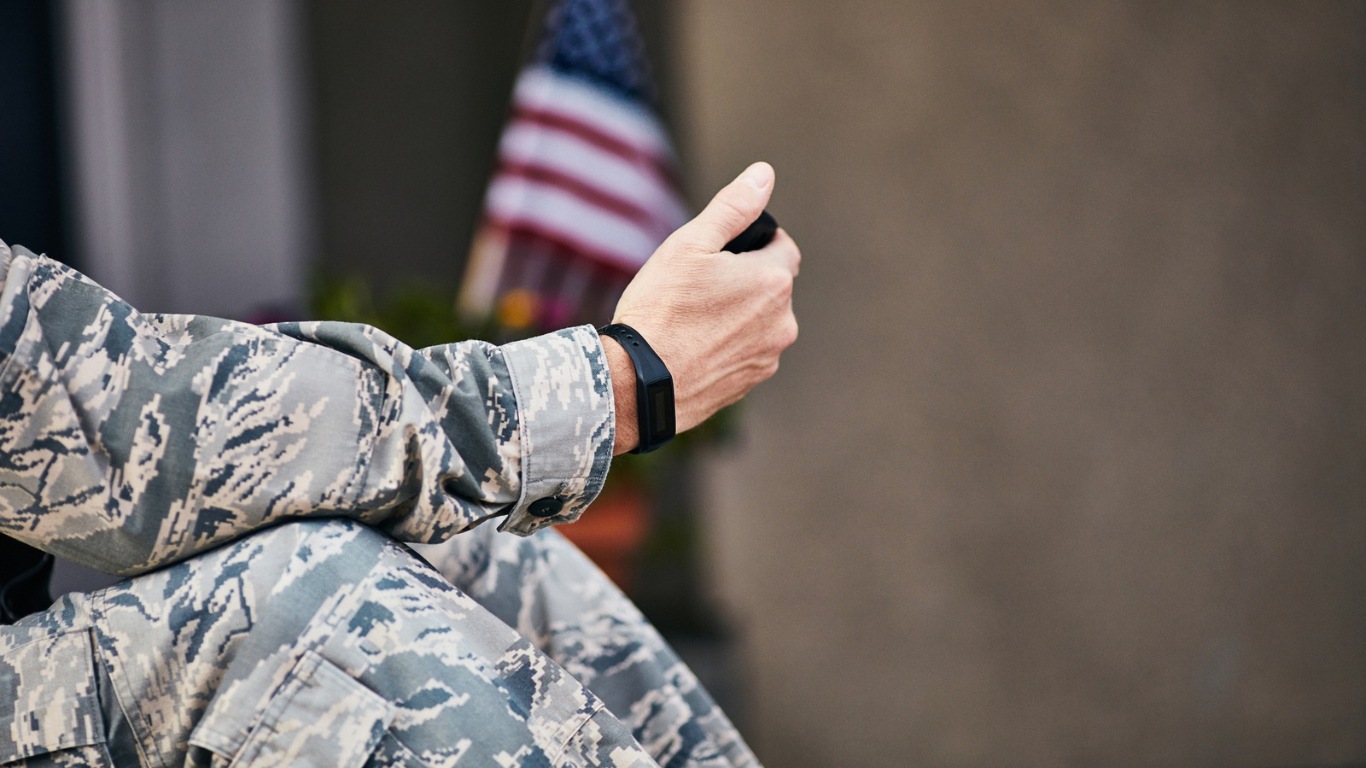
Beyond specialized devices, mainstream smartwatches and fitness trackers help veterans monitor heart rate, sleep, and activity. The VA has distributed Fitbits to veterans through a pilot program that veterans and clinicians both rated as successful.
Boston VA researchers have used wrist trackers to study PTSD nightmares, and VA Palo Alto has recruited veterans with PTSD and depression to track their symptoms with fitness trackers. Fall-detection features can also summon help automatically for those living alone. For a population managing chronic injuries, these tools put useful health data in veterans’ own hands.
Virtual tour of duty
CTIA Wireless Foundation’s Catalyst 2023 winner, Healium, provides an immersive, virtual solution for stress management, working with veterans to improve mental health outcomes.
Healium’s tech is a virtual and augmented reality platform that combines immersive nature environments with real-time biofeedback to help manage stress, anxiety, and pain
Healium also provides virtual reality tours to terminally ill and aging veterans who are unable to visit their memorials in Washington, D.C. Watch more below:
Tracking wearable bills–good and bad
Several recent bills would shape how easily veterans access wearable tech:
- Veterans STAND Act (S. 3988 / H.R. 6835): This worthwhile, bipartisan bill would require the VA to offer annual evaluations for veterans with spinal cord injuries, including consideration of powered exoskeletons and spinal neuromodulation. Both chambers have held hearings, but it has not yet passed.
- WEAR IT Act (H.R. 4203): This positive bill would let Americans use HSA and other tax-advantaged health accounts to buy qualifying wearables. It isn’t veteran-specific, but it would lower costs for veterans buying their own health trackers. It awaits action in the U.S. House Ways and Means Committee.
- California SB 1130: This disappointing bill would have required recording indicators on wearable devices and penalized certain nonconsensual recordings. Gov. Gavin Newsom vetoed it on September 30, citing its overly broad device definition. Opponents had warned the bill could sweep in assistive smart glasses, further stigmatizing veterans who suffer far higher suicide rates than the general U.S. population.
The right approach
Privacy concerns about camera-equipped wearables are real and worth addressing. But SB 1130 shows how quickly well-intentioned rules can hobble the very devices that help people live better, such as disabled veterans living independently. Lawmakers should focus on actual misuse rather than broad categories of technology.
The better path is the one the STAND and WEAR IT Acts point toward: expanding access and choice. Veterans have earned the freedom to use the best tools available, whether those tools come from the VA, a private company, or their own health savings. Policymakers should make that easier, not harder.
Veterans put their all on the line to protect America. We must honor their devotion and help lighten their burdens of sacrifice.