


Dear Leader Thune, Speaker Johnson, Chairman Cassidy, Chairman Walberg and Secretary McMahon,
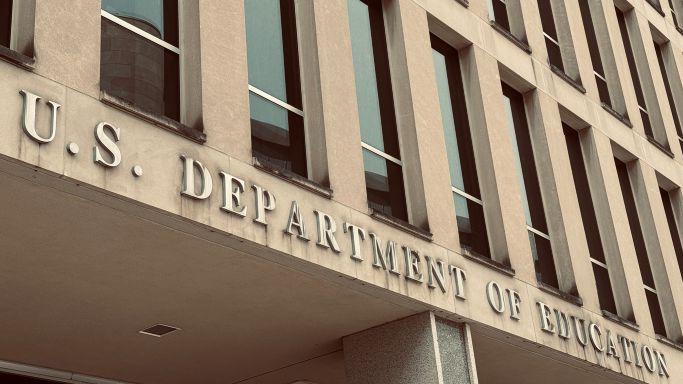
Congratulations to Education Secretary Linda McMahon and her staff for downsizing their own agency, preparing for closure, and, in turn, returning education to the states. These actions are not only unprecedented but demonstrate a clear understanding of the ongoing failure of the U.S. Department of Education to achieve measurable, positive results for students.
Likewise, under the leadership of Chairman Tim Walberg, the U.S. House of Representatives Committee on Education and the Workforce approved a slate of proposals that codify the interagency agreements (IAAs) between the Education Department and other executive agencies. These agreements share responsibilities between the Education Department and other federal offices, and the IAAs will allow for a deliberate, efficient transfer of viable federal education actions from the Department of Education to other offices.
This transfer of authority is essential because by any measure, the Education Department has failed to improve student achievement, make state education agencies more efficient, or protect parent and student rights. Research from 1998 on state officials’ administrative burdens caused by the Cabinet-level agency found that federal laws and regulations require some 48.6 million hours’ worth of paperwork per year, “the equivalent of 25,000 employees working full-time.”¹ The report “counted more than 20,000 pages of applications states must fill out to receive federal education funds each year.”
In 2011, the U.S. House of Representatives Committee on Education and the Workforce found that state and local education officials “work 7.8 million hours each year collecting and disseminating information required under Title I of federal education law” at a cost of “more than $235 million” to taxpayers—all just for administrative work.²
Federal lawmakers wrote in 1998 that the U.S. Department of Education had created a “cottage industry in selling information on program descriptions, application deadlines and filing instructions for each of the myriad federal education programs.”³ The agency’s operations and performance have not changed in the ensuing two decades since officials made this statement.
Meanwhile, per student spending has reached more than $20,000 per child while U.S. students’ average reading and math scores on national and international tests are mediocre.⁴ On the Nation’s Report Card, nearly two-thirds of fourth graders score at basic or below in math and nearly 70 percent score at basic or below in reading. While the Education Department does not open or close schools, nor does the agency employ teachers, the agency enforces policies and sets priorities for state lawmakers—none of which has improved student outcomes since the Department opened in 1980.
Secretary McMahon’s agency has appropriately invited states to apply for waivers from federal requirements, which has empowered local educators and families to make crucial decisions for children. Such waivers are a welcome change to the heavy-handed operations of previous federal administrations. These policies are consistent with Heritage’s policy design from 2020 to give state policymakers more decision-making authority and downsize the agency.⁵
Furthermore, the IAAs described above will protect and maintain constitutional federal authority such as civil rights enforcement. The Education Department’s IAA with the U.S. Department of Justice will streamline of civil rights operations and prepare federal, state, and local education offices for the eventual transmission of this authority from Education to Justice.⁶ Likewise, the Education Department’s IAA with the Treasury Department will allow for better oversight and operation of the federal student loan portfolio as policymakers consider further consolidation of federal loan options and, ultimately, stop using taxpayer spending for postsecondary loans.
We urge each of you to continue the essential process of closing the U.S. Department of Education. The Heritage Foundation has published model legislation that would close the agency and remove any reference to the Education Department from federal law.⁷ Federal lawmakers have used trillions in taxpayer spending over the last 40 years for Education Department activities and accomplished none of the agency’s goals, all while limiting the authority of parents and state and local policymakers. Members of the U.S. House of Representatives and U.S. Senate should consider bringing proposals to the floor of their respective chamber and collaborate with Secretary McMahon to sunset this failed bureaucracy.
Sincerely,
The Heritage Foundation
Center For Christian Virtue
Alabama Policy Institute
Arizona Free Enterprise Club
Christian Education Network
Commonwealth Foundation
Concerned Women for America
CT Parents Union
Defending Education
Eagle Forum
Family Policy Alliance
Freedom Foundation
Goldwater Institute
Gwen Samuel, President, Pride & Prejudice Inc.
Independent Women
James G. Martin Center
Jefferson Forum
Louisiana Family Forum
Military Families in Support of Parental Rights
National Association of Scholars
Oklahoma Council of Public Affairs
Our America
Project Pathfinder
Richard Viguerie, Chairman, American Target Advertising, Inc.
South Carolina Policy Council
The Honorable Bob Schaffer, U.S. House of Representatives (CO-4, 1997-2003), Former Colorado State Senator (1987-1997), Former Chairman and Member of the Colorado State Board of Education (2006-2013), and Colorado Public-School Headmaster
The New Criterion
Vicki Murray, Ph.D., Director, Center for Education & Paul W. Locke Research Fellow for Education, Washington Policy Center
Virginia Institute for Public Policy
Wyoming Family Alliance
Wyoming Liberty Group
Footnotes
- U.S. House of Representatives, “Education at a Crossroads: What Works and What’s Wasted in Education Today,” Subcommittee on Oversight and Investigations of the Committee on Education and the Workforce, July 17, 1998, p. 13, https://files.eric.ed.gov/fulltext/ED431238.pdf (accessed October 28, 2025).
- U.S. House of Representatives Committee on Education and the Workforce, “Kline Statement: Hearing on “Education Regulations: Weighing the Burden on Schools and Students,” March 1, 2011, https://edworkforce.house.gov/news/documentsingle.aspx?DocumentID=226697.
- One Hundred Fifth Congress, Second Session, “Education at a Crossroads: What Works and What’s Wasted in Education Today,” Subcommittee Report by the Subcommittee on Oversight and Investigations of the Committee on Education and the Workforce, U.S. House of Representatives, July 17, 1998, https://files.eric.ed.gov/fulltext/ED431238.pdf.
- Clara Moore and Malia Nelson, “Revenues and Expenditures for Public Elementary and Secondary Education: School Year 2023–24 (Fiscal Year 2024),” U.S. Department of Education, April 2026, p. 6, https://prod-ies-dm-migration.s3.us-gov-west-1.amazonaws.com/nces/asset_builder_data/2026/04/2026008_FY24NPEFS_FirstLook.pdf; Organisation for Economic Cooperation and Development, United States: Student Performance (PISA 2025), https://gpseducation.oecd.org/CountryProfile?primaryCountry=USA&treshold=10&topic=PI; see also, The Nation’s Report Card, available at https://www.nationsreportcard.gov/.
- Lindsey Burke, Ph.D. and Jonathan Butcher, “Correcting Carter’s Mistake: Removing Cabinet Status from the U.S. Department of Education,” Heritage Foundation Backgrounder No. 3492, May 4, 2020, https://www.heritage.org/sites/default/files/2025-03/BG3492.pdf.
- Jonathan Butcher, “Right-Sizing the U.S. Department of Education Before Closure,” Heritage Foundation Issue Brief No. 5411, July 17, 2026, https://www.heritage.org/sites/default/files/2026-07/IB5411.pdf.
- The Heritage Foundation, “Department of Education Abolition Bill,” available at https://www.heritage.org/article/department-education-abolition-bill.