

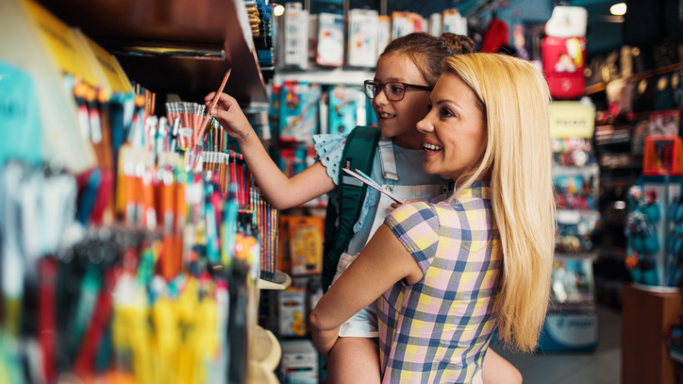
Affordability is the leading issue for all Americans today, including back-to-school shopping. The start of the new school year is still more than a month away for my three boys. Yet, I already feel a little behind in fulfilling three different shopping lists for two different schools.
The costs add up quickly, but there are strategies that early-bird shoppers and procrastinators alike can use to send their students back prepared without overspending. State and national policies are improving affordability, but there’s always room for more.
2026 may be the biggest back-to-school shopping year if the National Retail Federation’s projections come to fruition. Families are expected to spend a record $43.3 billion on K-12 and a record $103.5 billion on college expenses.
Shoes, school supplies, and electronics are projected to drive increased spending. These items are first-day essentials. My two younger boys are active and have worn through their sneakers on the playground and the soccer field, so new pairs are a must. Unfortunately, children’s footwear prices accelerated 4.7% year-over-year, the fastest in nearly four years. At least as a boy mom, I get more relief on apparel prices, which rose less than 1%. Girls’ apparel is up 5.8% from last year.
Filling up their backpacks with supplies will be a little more affordable this year, as prices on educational materials and school supplies are up only half a percent. College students get a big break as textbook prices actually fell from last year.
Some of the biggest savings for families this year compared to 2025 will be on electronics. Cell phone prices have fallen nearly 12% from last year, calculators are down 13%, and computers are down roughly 1%.
Retailers have pulled forward shipments of clothing and electronics in anticipation of future price increases, whether driven by rising costs of computer chips or possible tariff changes. That means more inventory and lower prices for consumers earlier on.
Strategically, retailers also lured shoppers in much earlier with marketing at the end of the last school year on staple supplies and teacher shopping lists. Instead of clustering shopping sprees in August, families started saving as early as June. Amazon Prime Day and competing Target Circle Day were big opportunities to snap up school deals, and while they may be long gone, look for retailers to offer special time-limited deals on items like backpacks, sneakers, and tablets before the start of the August shopping crunch period.
Policymakers do not have to sit on the sidelines. A great way that states help families afford back-to-school shopping is by eliminating or reducing taxes on relevant items. In 2026, 17 states (including my state of Maryland) will host sales-tax holidays, most lasting over a weekend, but Florida’s stretches for an entire month. Mississippi’s sales tax holiday already concluded, so families should check to see if their state participates and when, as the dates are fast approaching.
Five states—Alaska, Delaware, Montana, New Hampshire, and Oregon—do not offer a tax holiday because they have no state sales tax, which provides year-round relief. More states should consider lowering or eliminating their sales taxes, but at a minimum, they should provide families with annual relief during this season as Illinois did in reviving its sales tax holiday for 2026.
Tax relief has been a critical aid for families dealing with affordability this year. The Working Families Tax Cuts delivered the largest average tax refunds in 2026. This year, 53 million Americans took advantage of one of the new signature tax cuts—no tax on tips, overtime, car loan interest, and seniors’ incomes—which is projected to raise take-home pay by up to $10,000 for a median family with two kids.
Additionally, the tax bill expanded 529 plans to make them more flexible for K-12 educational expenses, such as online courses, tutoring fees, and resources for disabled students. The newly created Trump Accounts will give every child in America access to the stock market, ownership in American companies, and, for babies born over the next few years, a $1,000 grant from the federal government.
Back-to-school shopping doesn’t have to leave families penniless. Between taking advantage of sales tax holidays, spreading out shopping, taking inventory of current supplies before buying new ones, and only purchasing first-day essentials, families make every dollar go farther in filling up those backpacks.