

The 2026 United States economy and job market have shown strength, resilience, and growth, despite Americans declaring discontent, via gas and grocery prices.
For the 2026 holiday season, our prospects for a happy and productive season looks good, and may even exceed expectations.
The Gross Domestic Product (GDP) has shown growth of 2.3%, and the unemployment rate has shrunk to 4.4%. The sticking point has been inflation, which is 3.2%, 1.2% higher than the Federal Reserve-preferred average of 2%.
As Independent Women’s Anna Teply wrote:
With gross domestic product growing more than expected in the third quarter, private investment and consumer spending continue to power the economy.
According to the advance estimate, GDP grew 3.4% from July to September of this year. This is higher than the second quarter’s 2.2% growth and demonstrates a positive trend of GDP growth over the past year, despite challenging geopolitical circumstances due to the conflict in Iran. It is also above the Congressional Budget Office’s estimate of 2.2%.
With gross domestic product growing more than expected in the third quarter, private investment and consumer spending continue to power the economy.
“According to the advance estimate, GDP grew 3.4% from July to September of this year. This is higher than the second quarter’s 2.2% growth and demonstrates a positive trend of GDP growth over the past year, despite challenging geopolitical circumstances due to the conflict in Iran. It is also above the Congressional Budget Office’s estimate of 2.2%.
The year ahead will feature stubborn inflation, an improving job market, and solid economic growth, according to a group of forecasters who nailed their outlook for 2025.
With all the different 2026 forecasts out there, it’s hard to know whom to trust. So Investopedia reviewed the 2025 outlooks in the Wall Street Journal’s annual survey of economists and found one team that was pretty spot on with their predictions for this year: the group led by Joseph Davis at Vanguard.
Here were the key drivers to which Vanguard pointed:
- Consumer spending: Still the largest component (~70% of GDP), supported by wage growth and a healthy job market
- Government spending: Infrastructure investment and defense spending contributing positively
- Business investment: Technology and AI infrastructure spending partly offset by caution in interest-rate-sensitive sectors
- Net exports: Mild headwind from a still-strong US dollar vs. trading partners
But what about Americans’ sentiments that the economy is not working for them, but against them? These feelings are not without basis. Gas and grocery prices are inextricably linked, as Independent Women’s November policy focus on food prices explains. Delivery of goods and services, including food, is primarily done through our trucking industry, and the price of diesel has been prohibitive, driving up the cost of food and goods.
However, since before the November midterms, fuel prices have been steadily dropping. While diesel still hovers around $6.00 a gallon, the average gas price nationwide is around $3.36.
But even with Americans’ expressed sense of insecurity, two things belie those feelings and reflect a greater confidence than stated: The jobs market and consumer spending. Both are doing the work of moving the economy forward. As the November jobs report detailed, unemployment claims have fallen to their lowest since July. Fewer people looking for work reflects that more people are content with their employment. The layoff atmosphere has lessened compared to prior years, reflecting a commitment by companies to sustain their workforces rather than shed them.
And 2026 consumer spending has risen, not fallen. With increased purchases of goods and services, consumer spending shows that Americans are participating more in our commerce rather than holding back.
As Yahoo Finance reported last week:
Americans’ capacity to spend continues to buoy the economy despite a cost-of-living crunch. The latest measures of consumer retail spending continue a years-long story about cash-strapped households soldering through inflation — and doing so especially as other key parts of the economy look weaker.
As the AI robots stumble, the flesh-and-blood American consumer is still out there on two feet and spending, even if they are looking for deals.
This week’s corporate earnings so far show that even though there are bright spots heading into the holiday shopping season, there are still signs of stress and a renewed focus on seeking value above all else.
Innovative ways to save on the food we desire
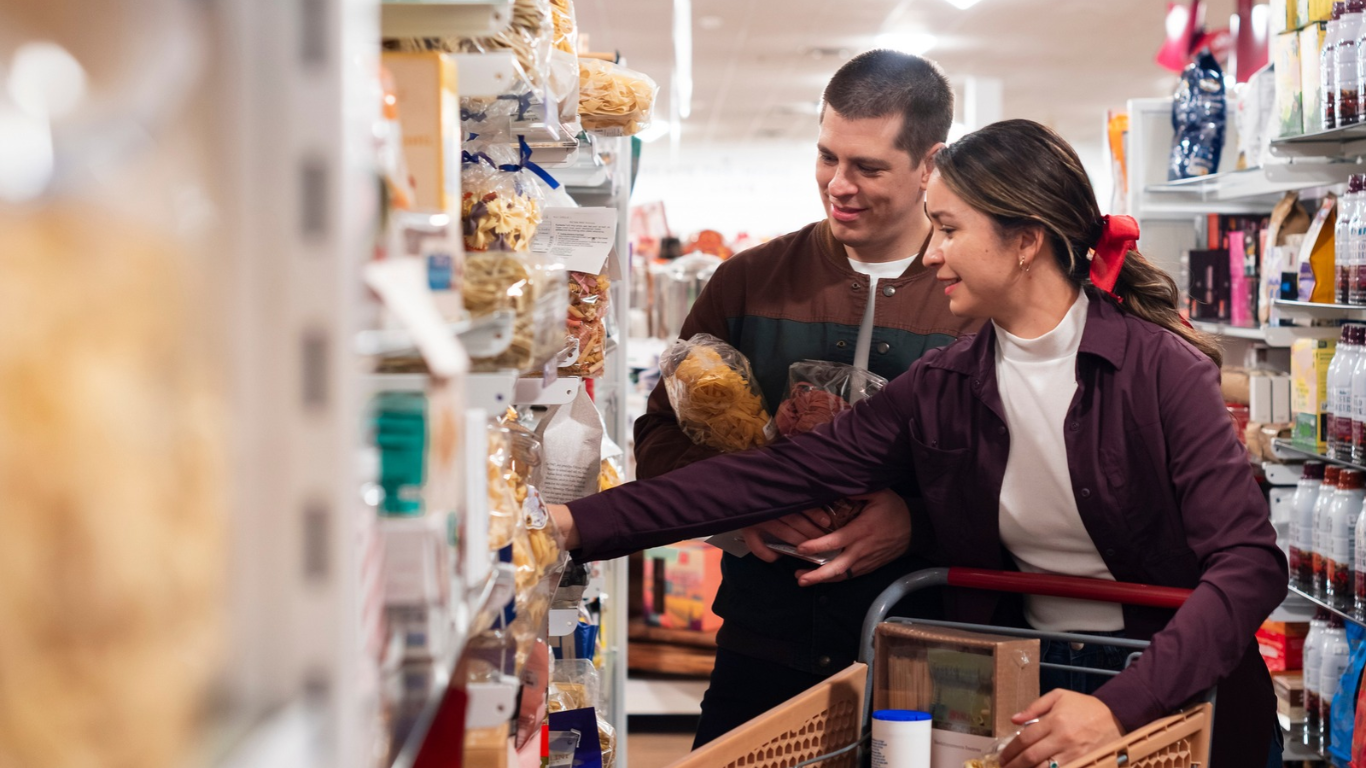
“Seeking value above all else” is not a bad thing, but a good one. The free market, with some government encouragement, is innovating ways to deliver the food Americans want at price points they can afford.
The Trump administration’s MAHA initiatives not only encourage Americans to eat real food but also show them how this can be done on a budget. However, the private sector has been leaning into affordability without a government mandate, like Aldi. Many Americans have turned to this retailer over traditional and chain grocery outlets, fueling Aldi’s tremendous growth in 2026. According to its report, Aldi has saved American consumers 10.2 percent in 2026 alone.
Major grocery conglomerate Kroger doesn’t want to leave its customers behind. The chain is making moves for “more products to carry lower prices every day, rather than making customers wait for a sale or navigate complicated promotions to get a better deal.” Kroger has been test-marketing this format across certain regions, and plans to roll it out nationwide in the upcoming year.
Despite the increased price of beef this year, Americans did not decrease their meat consumption. Instead, they became creative in the ways in which they purchased the product.
Because of the rise of lab-grown meat among major markets, local and regional box delivery services like Butcherbox and Good Ranchers have increased in popularity and allow customers to scale up or down their offerings depending upon their budget. For Americans who live near rural farming areas, direct purchases from local meat producers have also gained acceptance, especially since the Trump administration has worked to remove regulations that have prevented this in the past.
As Americans seek cost-savings and value, what has also seen an increase in prominence and popularity is purchasing secondhand goods.
According to Gitnux, 76% of Americans bought used goods in the 12 months covered by a 2026 survey, while 44% said they were buying more secondhand than two years earlier.
Technology and AI has also boosted this market’s share, with apps like ThredUp, Vinted, and Poshmark expanding options for the American consumer and increasing competition with the brick-and-mortar retailers.
Despite Americans flailing confidence in the economy, what is abundantly clear is that its resiliency and strength is shown in Americans not only continuing to engage in it, but both consumers and retailers’ ability to innovate and find ways to meet the needs and wants of Americans as inexpensively and efficiently as possible.
It’s the American way.