


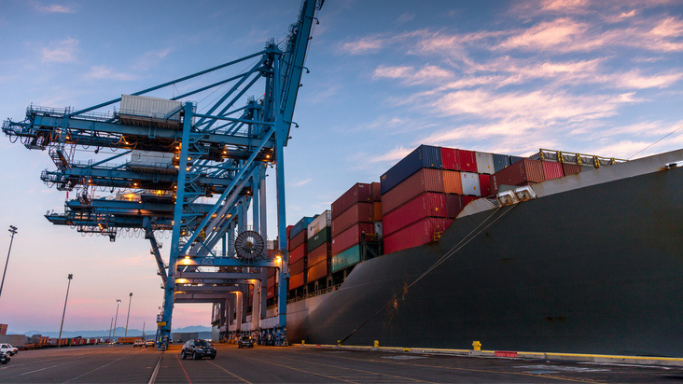
The White House is expected to extend its waiver of the Jones Act beyond its August 16th expiration. On August 4th, Energy Secretary Chris Wright told reporters that, “I think another extension, temporary extension, of the Jones Act waivers is quite likely to happen.”
The Jones Act requires cargo moving between U.S. ports to be carried on ships that are American-built, owned, flagged, and crewed. If policymakers recognize the harm of the Jones Act during times of emergency, such as closures of the Strait of Hormuz, why maintain it during the status quo?
The current waiver covers energy commodities and fertilizer inputs across 659 product categories. By its August 16 expiration, the current suspension of the 1920 law will have run 150 days, the longest in the law’s century-long history. That makes it a natural experiment for how the Jones Act has suppressed trade that would otherwise exist.
The Cato Institute has collected voyage reports over this period for trade that would’ve otherwise been illegal earlier this spring. As of August 4, 2026, 208 voyages and 169 unique vessels have used the waivers to deliver more than 14.5 million barrels of gasoline, 16.8 million barrels of crude oil, and 2.55 million barrels of diesel to the U.S.
In the first 50 days of the waiver, foreign-flagged tankers enabled the movement of about 1.59 million barrels of energy products from the Gulf Coast to the West Coast. California has benefited extensively from the ability to ship Gulf Coast energy to its consumers.
The Jones Act’s economic effects fall particularly hard on residents of Hawaii, Puerto Rico, and Alaska because they have no overland alternative. A 1988 Government Accountability Office (GAO) report found that the U.S.-build requirement imposed costs of $163 million per year, or about $450 million in 2026 dollars, on just Alaska. Three shipments of jet fuel and one of mixed clean fuel made it to Alaska from Louisiana, Texas, California, and Washington, under the Jones Act waiver. Puerto Rico finally got access to U.S. propane.
Residents of non-contiguous states and territories already pay more for groceries, fuel, and housing than almost anyone else in the country, and the Jones Act just adds to the cost of living.
The current waiver covers natural gas, which is a relief to New England states that have restricted their own overland pipeline capacity. No oceangoing liquefied natural gas (LNG) carrier in the world meets the Jones Act’s requirements (the French-built “American Energy” can only serve Puerto Rico under a narrow exemption), which means that New England must import its LNG from overseas rather than purchase it domestically.
The U.S. maritime lobby has been “escalating their campaign against extending the Jones Act waiver,” on the basis that it harms national security and U.S. maritime readiness. If so, the law is failing on its own terms; the U.S.-flag fleet fell from 1,050 ships in 1950 to 365 by 1987, and jobs fell by four-fifths. By 2023, there were only 93 Jones Act-eligible ships. Nor are Jones Act ships routinely called into service for defense because their absence from commercial trade would cause economic disruption. The Jones Act doesn’t touch the Navy’s shipbuilding.
While outright repeal of the Jones Act would provide the certainty needed to establish new maritime routes in the long term, the administration’s waivers and pursuing more modest reforms are a good start.