


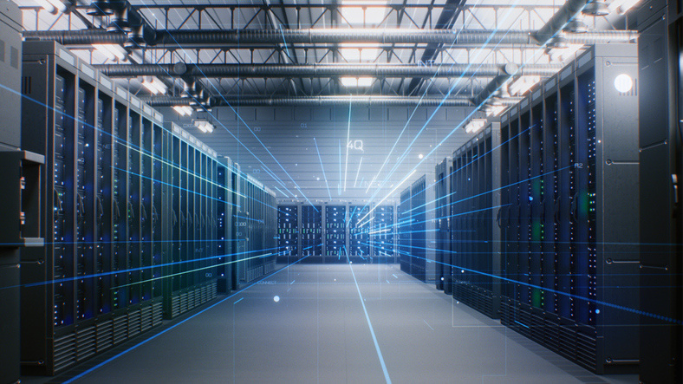
Sam Altman heads to Washington this week to showcase OpenAI’s newest model, but the bigger story isn’t the model. It’s what runs it. Every chatbot query, AI agent, and capability jump depends on a data center, with energy flowing into it and land underneath it.
Data centers are the existential fight that’s going to determine who wins the AI race, and it’s playing out right now in state legislatures. Last Friday, the American Legislative Exchange Council (ALEC) introduced a draft Policy Statement outlining this: the Digital Infrastructure & Ratepayer and Resource Protection Accord.
Its core argument is data centers are now foundational infrastructure, comparable to roads and broadband for prior generations. States banning or freezing them aren’t protecting anyone; they’re simply handing the investment to whichever state or country takes leadership.
The Accord isn’t a blank check. It insists the costs of massive new electric loads don’t land on ordinary households and small businesses. But its default posture is clear: Outright bans and moratoria are off the table, and government’s job is to create an environment that supports a fast, predictable path for this infrastructure.
The ALEC Accord outlines four principles:
- Permitting should be clear and consistent. “Permit by rule” approval plus shot-clock deadlines, so projects aren’t held hostage through indefinite review.
- Costs should land on whoever causes them. A data center’s grid demands get billed to the data center, not folded into consumers’ electric bills.
- Power and water rules should stay technology-neutral. Set outcome targets rather than mandating specific cooling or energy systems.
- Property rights should hold once capital is committed. A filed site plan shouldn’t get rewritten by a later, politically motivated freeze.
It’s easy to watch Altman preview a model in Washington and think the important decisions happen only in a briefing room. But decisions that determine whether the next wave of AI infrastructure is built in Ohio, Texas, and Virginia—or overseas—are being made in state capitals, over permitting timelines and utility tariffs.
President Trump made this argument in July, criticizing New York Gov. Kathy Hochul over her data center moratorium. Trump called data centers one of the biggest engines of job creation, describing them on Truth Social as “big, strong, bold, and Money Machines for the state in which they are built.” Trump correctly pointed out that blocking AI infrastructure doesn’t protect a state—it simply pushes jobs and technological edge elsewhere. He’s right that moratoria and stalled permitting are shortsighted exactly when the country needs to build faster.
On July 23, Trump expanded his voluntary Ratepayer Protection Pledge to more than 200 signatories, including 23 governors, 55 utilities, and 27 data center developers—among them Amazon, Google, Meta, Microsoft, OpenAI, Oracle, NextEra Energy, and Duke Energy. The White House says the pledge now covers roughly 80% of all electricity delivered to American homes and businesses. This is a federal version of what the Accord asks states to codify: Build fast, but make the people benefiting from the buildout pay for it.
Meanwhile, China isn’t waiting around. The Chinese Communist Party (CCP) isn’t debating whether to slow its data center buildout—it’s accelerating. Beijing fast-tracked a roughly $295 billion, five-year national computing buildout under its “Six Networks” program, part of its 15th Five-Year Plan, reportedly pulling the timeline forward from 2030 to 2028. CCP-controlled telecom giants China Mobile and China Telecom will operate the grid, with a mandate that at least 80% of the chips and equipment come from domestic suppliers led by Huawei.
There are real hurdles, including chip supply constraints and a U.S. semiconductor industry that executives admit trails the leading edge by five to ten years. But the intent is clear: Treat computing infrastructure like roads or the power grid and build it as fast as the state can move.
While American cities and states argue over permitting timelines and nuisance concerns, Beijing has declared a national computing network core infrastructure. The ALEC Accord and the Ratepayer Protection Pledge are America’s answer, a bet that the U.S. can build just as fast without sacrificing the environment or free-market and property-rights principles.