

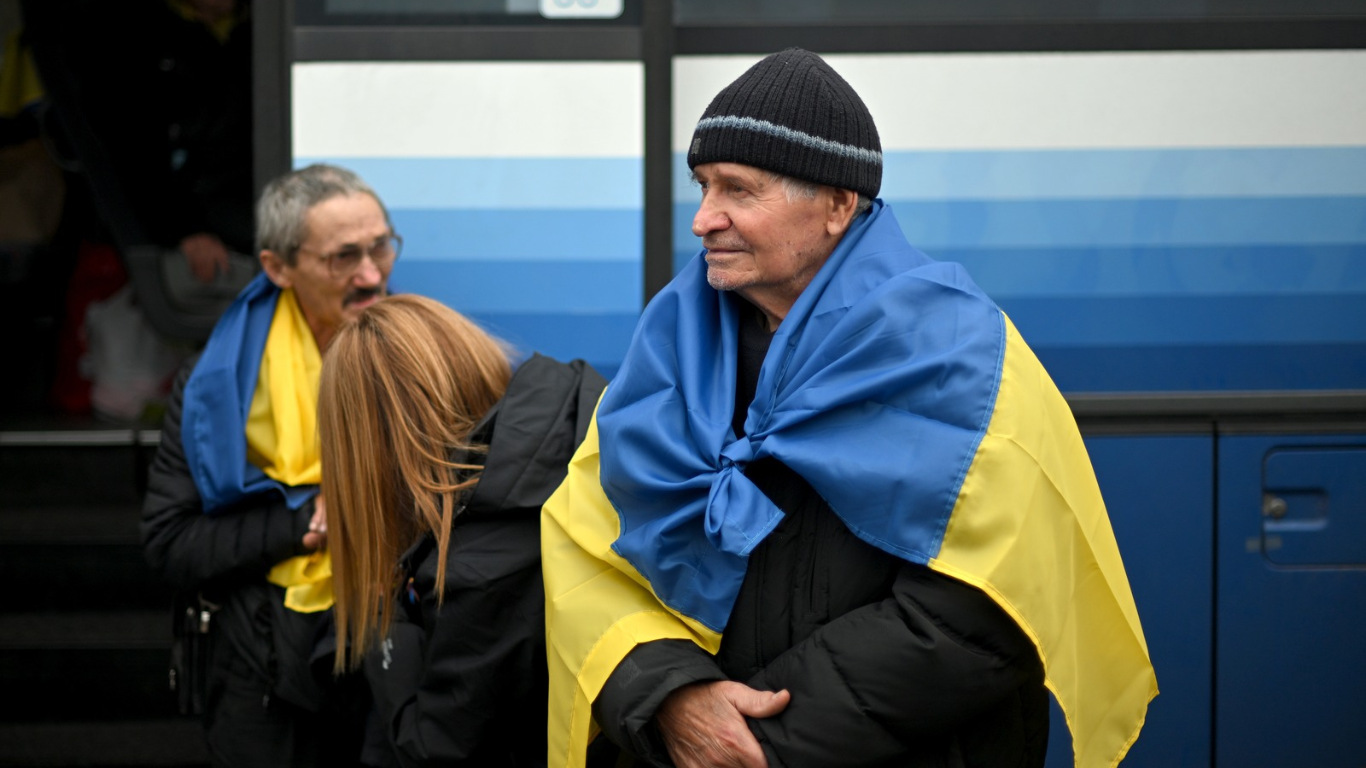
As Russian missiles continue to rain down on Kyiv and other Ukrainian cities, the guns have fallen silent in Oleshky.
In a war that has consumed nearly five years and countless lives, the contrast is difficult to reconcile. Across Ukraine, families continue to scramble to shelters in the middle of the night, muddle through days without power, and, tragically, bury their dead. Yet in one small, Russian-occupied city in Ukraine, a humanitarian ceasefire secured through the efforts of First Lady Melania Trump has taken hold.
It is a remarkable moment in the history of American First Ladies. It may also prove to be something more consequential: an opening, however narrow, toward a broader cessation of hostilities.
It is a remarkable moment in the history of American First Ladies.
For much of American history, the office of First Lady has occupied an unusual position: proximity to extraordinary power without formal authority to exercise it. Some women have used that position to transform the moral reach of American leadership. Eleanor Roosevelt helped shape the Universal Declaration of Human Rights. Rosalynn Carter represented the United States on diplomatic missions. Nancy Reagan cultivated relationships across Cold War divisions. Laura Bush elevated the plight of Afghan women and girls, making their rights a concern of American foreign policy.
Melania Trump now enters that tradition in a distinctive way. Her involvement in Oleshky has gone beyond drawing attention to suffering. She helped facilitate an agreement between two countries at war to stop shooting in a defined place for a defined humanitarian purpose.
The effort builds on her work to reunite children stolen and endangered by Russia’s invasion. That work required sustained engagement across a bitter divide. Oleshky suggests that the channels opened for one humanitarian purpose can sometimes be used for another and reminds us that diplomacy does not always begin with a grand bargain. Sometimes it begins with a child coming home, or an elderly woman being fed.
There is also a broader lesson here about the power of women in international affairs. Sometimes progress requires someone willing to enter a familiar conflict with an unfamiliar approach, to recognize possibilities others have overlooked, and to exercise influence in ways that traditional power structures do not always anticipate.
History has repeatedly demonstrated that women can exercise influence in ways that transcend traditional structures of power. Particularly in environments defined by entrenched positions, competing egos, and profound distrust, women can sometimes create openings that conventional diplomacy has struggled to find.
Their influence need not derive from military authority, institutional rank, or the ability to compel an outcome. It can emerge through relationships, persistence, moral conviction, and a willingness to approach seemingly intractable problems from a different direction.
Different perspectives and approaches matter, particularly when the stakes are measured in human lives.
This is not to suggest that compassion is the exclusive province of women, or that women are somehow immune to the calculations of power. But different perspectives and approaches matter, particularly when the stakes are measured in human lives.
Before the full-scale invasion, Oleshky was home to thousands of Ukrainians. Years of occupation, destruction, flooding, and deprivation by the Russian occupiers have left many of those who remain, particularly the elderly, struggling for the most basic necessities. A ceasefire offers the possibility of food, medicine, and safe passage. Its worth will be measured by what reaches people on the ground and by whether civilians who wish to leave can do so safely.
I have traveled to Ukraine more than 30 times since February 2022. I have stood outside railcars filled with the remains of the dead, watched body bags laid across open fields, and met families whose losses are almost impossible to describe. I know the terrible cost of this war with an intimacy I would never have wished for.
I also know that Russia has not stopped its assault on Ukraine. Even as Oleshky grows quiet, the bombardments continue. We must be capable of holding many truths at once.
The ceasefire does not erase the invasion. It does not absolve Vladimir Putin of responsibility for the suffering of people living under Russian occupation. It does not prove that Moscow is prepared to accept a just peace. Russia’s record demands scrutiny, enforceable commitments, and verification, not congratulatory assumptions about changed intentions.
And yet, in Oleshky, there is agreement, and that is progress, even if for a moment.
For those who may now receive medicine or leave a devastated city, that matters enormously. It may matter beyond Oleshky, too. An agreement to suspend fire for a humanitarian purpose requires practical coordination, a defined scope, and at least some willingness to honor reciprocal commitments. If this pause holds, it could provide a model for additional local agreements, longer pauses, or the beginnings of a broader, verifiable ceasefire.
Hope, properly understood, does not ask us to ignore reality. It asks us to refuse the assumption that reality can never change.
None of that is inevitable. A humanitarian opening can be exploited, violated, or allowed to expire. Already, it appears Russian forces are using the pause to reposition troops, reinforce military positions, and move equipment closer to the front. These allegations demand scrutiny and serve as a sobering reminder of whom we are dealing with.
Russia has repeatedly demonstrated its willingness to exploit humanitarian arrangements for military advantage, and goodwill cannot become a substitute for vigilance. The United States should neither trade away Ukrainian sovereignty for the appearance of progress nor dismiss a genuine opportunity because the adversary remains untrustworthy. The task is to test the opening with eyes wide open, holding Russia accountable to its commitments without surrendering leverage, strategic judgment, or moral clarity.
That balance speaks to a larger confusion in American foreign policy. We have begun to treat national interest and national values as though they were competing commitments. Compassion is too readily dismissed as weakness, and moral clarity is treated as an impediment to diplomacy. The defense of innocent life becomes a secondary consideration, something to be attended to only after the supposedly serious business of power has concluded.
As a psychologist and a veteran, I reject that division. Strength without purpose becomes an end in itself. Restraint, judgment, and the capacity to recognize another person’s humanity do not diminish power; they give it direction.
American leadership has always been more than the reach of our military or the size of our economy. Our history is also a struggle, imperfect and often painful, to bring our actions into closer alignment with our professed ideals. Those ideals matter most when honoring them is difficult.
America First should never require us to forget what America stands for.
We can negotiate with Russia without confusing aggressor and victim. We can welcome a humanitarian ceasefire while condemning the missiles still falling on Ukrainian cities. And we can recognize Melania Trump’s historic achievement without pretending that a local pause is the same as an enduring peace.
Perhaps Oleshky will remain a singular reprieve. Perhaps it will become the first of several. Perhaps, through careful diplomacy backed by verification and pressure, it will open a path toward something larger. I have spent years learning the danger of misplaced hope. But I have also seen what happens when people are left with none.
Dare we hope?
I believe we must. Not because Putin has earned our trust, or because the obstacles have disappeared, but because the possibility of saving lives creates an obligation to try. Hope, properly understood, does not ask us to ignore reality. It asks us to refuse the assumption that reality can never change.
Remarkably, Melania Trump has helped open a door. What happens next will depend on whether the ceasefire holds, whether aid reaches those who need it, and whether American diplomacy can turn a limited humanitarian success into a wider reduction in violence. The work ahead is harder than the announcement. It is also worth doing.
America First should never require us to forget what America stands for. Our interests must be downstream of our values. For when we sacrifice the principles that define us in pursuit of the power to defend them, we risk preserving American strength while surrendering what makes it worth having.