

What’s At Stake
What is the case about?
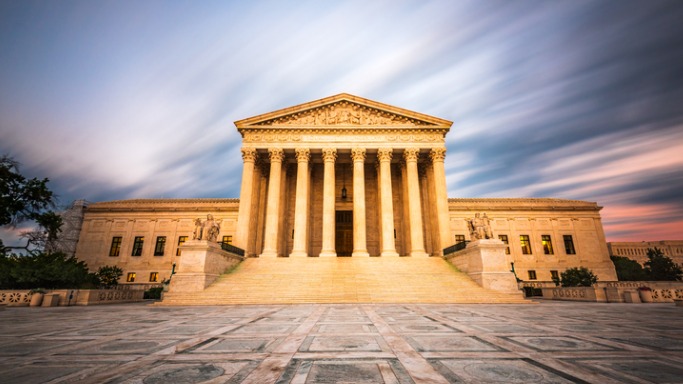
Can the federal government prohibit Americans from making whiskey in their own homes in the name of collecting taxes? That is the question before the Supreme Court in Department of Justice v. McNutt. On October 19, 2026, the Court agreed to hear a challenge to a nearly 160-year-old federal law prohibiting Americans from distilling spirits in their homes or on adjoining property.
The prohibition dates back to 1868, when Congress sought to combat widespread tax evasion following the Civil War. Although Americans may legally produce limited quantities of beer and wine at home for personal consumption, federal law prohibits them from doing the same with distilled spirits.
Circuit Split: Petition for Certiorari Granted
In April 2026, two federal appeals courts reached opposite conclusions about the constitutionality of the home-distilling ban. In McNutt v. Department of Justice, the Fifth Circuit ruled that the prohibition exceeded Congress’s authority under the Taxing Clause and the Necessary and Proper Clause.
Just eleven days later, the Sixth Circuit upheld the same law in Ream v. Department of the Treasury, concluding that restricting where spirits may be produced was a permissible means of preventing tax evasion and protecting federal revenue.
The conflicting decisions created a circuit split. The Supreme Court will now resolve whether Congress’s taxing power, together with the Necessary and Proper Clause, authorizes the prohibition.
Who is affected and how?
The immediate impact will be on Americans who wish to distill spirits at home for personal consumption. But the decision could have broader implications for businesses, property owners, and individuals subject to federal regulation.
A ruling upholding the law could reinforce Congress’s discretion to regulate activities connected to federal taxation. Striking it down could establish clearer constitutional limits on the government’s ability to prohibit private conduct in the name of tax enforcement.
Why does it matter?
This case is about far more than whiskey. Article I of the Constitution grants Congress specific, enumerated powers, including the power to lay and collect taxes. The Necessary and Proper Clause permits Congress to enact laws carrying those powers into execution. The question is whether that authority extends to banning private conduct to make tax enforcement easier.
Our Take
The Constitution grants Congress the power to collect taxes, not unlimited authority to prohibit otherwise lawful conduct. The Necessary and Proper Clause is not a blank check for federal overreach, and administrative convenience cannot justify expanding Congress’s enumerated powers.
The government can tax distilled spirits and punish tax evasion without criminalizing home distilling altogether. If making enforcement easier is sufficient justification for a federal prohibition, what meaningful limits remain on Congress’s authority?
Our Constitution was designed to restrain government power, not accommodate its convenience. The power to tax is not an unlimited power to prohibit, and the Supreme Court should reaffirm that fundamental constitutional distinction.
