

Every American knows the feeling. You need something simple from government like a passport renewal, information on benefit enrollment, or a tax form, and you end up lost in a maze of agency websites. Each with its own login, alphabet soup of jargon, and lots of dead links. The private sector solved this problem years ago. You can order groceries, book a flight, and refinance a mortgage from your phone. Yet dealing with our federal government still feels like 1998.
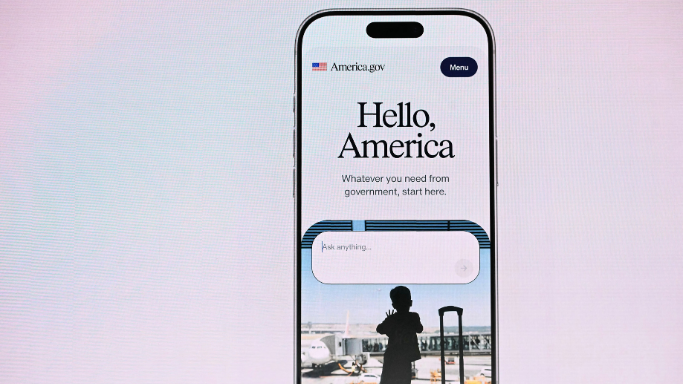
That’s why today’s launch of America.gov matters. President Trump and Vice President JD Vance unveiled a single, AI-powered “front door” to the federal government: A one-stop shop meant to replace the labyrinth of federal agency websites Americans navigate today. Airbnb co-founder Joe Gebbia and the White House’s National Design Studio are leading the project, and early reporting points to big ambitions.
The site features AI assistants as the main way to streamline numerous federal government services. As the homepage states, “29,000 websites into one. No more wandering from site to site. America.gov brings the government together in one place.”
Conservatives should cheer. This is what smart, limited government looks like. It’s government doing its core jobs well and respecting citizens’ time.
Consider the stakes. The National Taxpayers Union Foundation estimates Americans spend nearly 7 billion hours every year preparing and filing taxes. That time is taken from families, businesses, and communities. Every hour a mom spends on hold with a federal agency or deciphering a form is an hour she isn’t spending with her kids or growing her business. A government that removes that friction is giving citizens back the most valuable currency there is.
America.gov also fits a pattern. As Independent Women noted, Vice President Vance recently showcased how AI can root out an estimated $250 billion in government fraud. The same technology protecting taxpayers from waste will now serve them directly.
It reflects the Trump administration’s broader posture on AI: measured and rational by supporting innovation, keeping America ahead of China, and adding sensible guardrails without smothering progress.
The China race is not abstract. Beijing has fast-tracked a national computing buildout of nearly $295 billion. Showing that AI can make Washington more responsive is part of winning public confidence at home and staying competitive abroad. The biggest AI mistake America could make is standing still, and on citizen services, Washington stood still for decades.
Paying taxes and complying with federal law aren’t optional, of course. But how Americans meet those obligations should be their choice. America.gov is a voluntary convenience, but paper forms, mail-in applications, and private tax-prep options remain intact.
The new site guarantees strong privacy protections, noting, “America.gov keeps your data private. Your personal information isn’t collected or stored, and your conversation disappears when you leave.” We hope this claim holds up against cyberattacks and hackers, who often target sensitive government data and have been successful in the past. Ongoing, sophisticated hacker and cyber threats underscore President Trump’s decisive actions and urgent calls for America to lead in the global AI race.
Beyond this new service, government staff offer a human backstop when the chatbot can’t solve a problem. This should allay some questions or fears citizens might have of never being able to connect with a live person.
Launch day is a beginning, not a finish line. America.gov will iterate and self-correct as it serves real users over months, not in its first 24 hours.
America.gov is on track to model how a modern republic serves its citizens: fast, simple, and respectful of their time and money. Washington has spent decades asking Americans to adapt to its bureaucracy. It’s about time the bureaucracy adapted to Americans.