

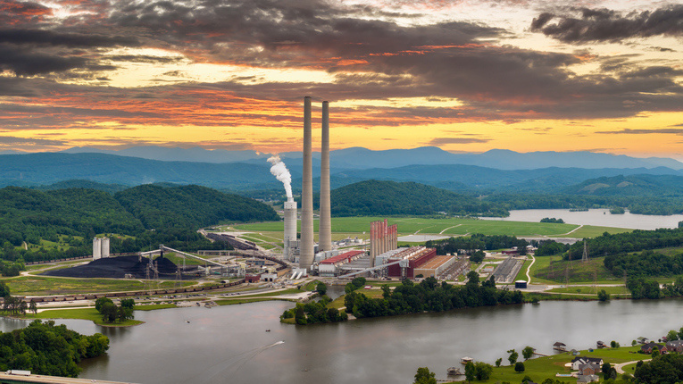
The Environmental Protection Agency (EPA) announced this week that it finalized its repeal of the Biden administration’s greenhouse gas requirements for power plants. The rule would have cost hundreds of billions of dollars and led to widespread blackouts.
The rule, finalized by the Biden administration in 2024, issued an ultimatum to existing coal-fired plants and new natural gas plants: Either capture 90% of carbon emissions by 2032, or close up shop. The four largest grid operators in the U.S., serving 30 states and 155 million people, joined together to warn the Biden EPA that the “needed technologies are not widely commercialized” and that the rule would pose reliability challenges. This administration’s EPA now admits that 90% carbon capture was not adequately demonstrated to be commercially feasible at the necessary scale and that its costs would have been unreasonable.
Always On Energy Research, where I work, modeled just how costly it would be. In just the Southwest Power Pool (SPP), which serves about 6% of the U.S. population, building the wind, solar, and battery storage necessary to replace retiring coal, natural gas, and nuclear under the rule would cost $65.6 billion more than operating the current grid. For context, the Biden EPA only estimated $19 billion in compliance costs through 2047.
The EPA now estimates that repealing the rule will save $310 billion, which would ultimately reach households as higher electricity prices. Consumers can ill afford new costs, at a time when average U.S. electricity prices are rising.
Nor can consumers afford to endure blackouts, which have economic, human health, and environmental costs. The Biden EPA never bothered to check if its projected generation mix would keep the lights on hour-by-hour. Always On did, and found that against historical 2021 conditions, there would be 13 separate blackout events across 12 days in February 2040, one lasting 41 straight hours, totalling thousands of hours of blackouts across the EPA model years. When one adds up the negative effects of power outages on consumers and businesses, blackouts in SPP alone would cost $106 billion to $402 billion—against only $370 billion in net benefits the Biden EPA claimed for the entire country.
And all this came before electricity demand began to skyrocket due to data center buildout.
The North American Electric Reliability Corporation (NERC) puts roughly half of the country at a high risk of blackouts by 2030 as demand climbs and dispatchable plants retire. Repealing the rule is the right move for consumers’ wallets and for the reliability of the grid.