

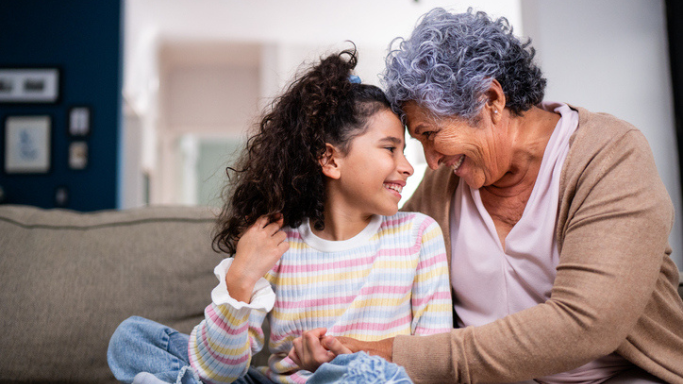
This Sunday on Grandparents Day, we celebrate the people who raised us, spoiled us, guided us, and helped to hold our families together.
But behind the family photographs, there is a reality that we rarely talk about: Grandparenthood is changing. Fewer Americans are becoming grandparents, and their experience is becoming more stratified by income, education and distance from their grandkids.
Americans are waiting longer to have children, if they have them at all. As a result, the number of grandparents in America is shrinking. There were 70 million grandparents in the U.S. in 2018. Today, there are closer to 65 million. Those who do become grandparents are reaching that milestone later in life. In the early 1990s, the mean ages at transition to grandparenthood were 46 for women and 49 for men. Today, these ages are 50 for women and 54 for men, and rising.
At the same time, due to longer life spans, the number of great-grandparents has increased in recent years and will continue to increase. The result is a fascinating demographic contradiction: Americans are becoming grandparents later, but living long enough to spend more years as great-grandparents.
Longer lives, however, do not necessarily mean more healthy years together. The number of years when grandparents can remain active without major health problems is getting smaller. This is a concerning reality. As our entire population ages, families are also aging and shrinking, meaning more elderly family members will be in need of care from fewer younger family members.
The vast majority of elderly people live outside of nursing homes and rely on informal, unpaid care, mostly from family. Today, 21% of people aged 55–64 and 15% over 65 have care responsibilities to aging parents. As our population lives longer, and as an increasing number of older Americans don’t have children or spouses, more and more people will age without the support they need.
Geographic and relational distance are some of the greatest forces shaping grandparenthood, and these correlate strongly with income and education. Families with higher levels of income and education are more likely to live far away from grandparents.
But the good news is that many of those families maintain strong relationships, even across the miles. This is often facilitated by technology, as more grandparents (76%) report that video calling, texting, and social media play a role in keeping in contact with their grandkids.
Many grandparents live very close to their grandchildren: According to AARP data, 1 in 4 grandparents have reported living with their grandchildren at some point in the past year, and 1 in 10 are living with their grandchildren.
In fact, America is now seeing a trend toward more multigenerational living, not less. Many of those who do not live with their grandchildren are living in close proximity, with 47% living within 10 miles of their grandkids.
This proximity matters. Grandparents who live close to their children and grandchildren are able to offer support to their families, usually in the form of childcare. On average, grandparents provide more than 500 hours of childcare a year for their grandkids, and most of this goes to grandkids who live nearby.
Not only is this a help for parents, but it also provides a massive boost to the American economy that often goes unnoticed. By allowing parents – especially mothers – to dedicate more time to the workforce, grandparent care supplies $731 billion to the economy.
Taken together, these trends reveal a complex picture of grandparenthood in modern-day America. Americans are having children later, living longer, moving closer or farther apart. Yet the importance of family has not disappeared. Many Americans still support their family members and still show up to help in times of need.
This Grandparents’ Day, let’s celebrate our matriarchs and patriarchs as well as the family bonds they represent. Because no matter how much the American family dynamic changes, one thing remains: we need each other, and no one ages out of that reality.