

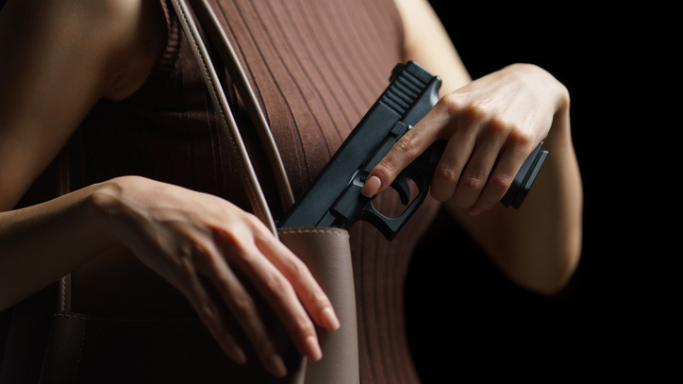
Many women haven’t heard of a firearms suppressor. Also called a silencer, it is an attachment on the muzzle that significantly reduces the sound, flash, and recoil of discharging a firearm. Just recently, a lawsuit in support of suppressors delivered a major win—both for Second Amendment rights and for the women exercising those rights.
Here’s what happened. For almost a century, the National Firearms Act strategically taxed suppressors rather than outright banning them. In 1934, when this law was enacted, Congress did not believe it possessed the power to ban suppressors. Instead, the new law imposed a $200 tax on every suppressor transfer and created burdensome regulations—forms, fingerprints, and an approval form from the Bureau of Alcohol, Tobacco, Firearms, and Explosives (ATF)–in order to collect the tax.
Effective January 1st of this year, the One Big Beautiful Bill reduced that tax to $0, gutting the penalty mechanism. The question then became: Is a $0 tax truly enforceable? Quickly, a lawsuit followed, with a coalition of Second Amendment organizations, including Gun Owners of America and Silencer Co., arguing that no, transfers should not be regulated by the ATF as the $0 tax was not enforceable. The DOJ and ATF were put on defense and argued that the regulations remained valid under the Constitution, and that suppressors were not protected by the Second Amendment. But this defense missed the point: A $0 tax can’t sustain a taxing-power statute.
On August 5th, a Texas judge ruled against the DOJ and ATF. No appeal was filed, and the path was opened for suppressor transfers—for free and with minimal regulation.
So why does this matter for women?
Suppressors are a firearm accessory that distinctly and uniquely benefit women. Women are the fastest-growing demographic of gun owners. If a woman is in a situation where self-defense is required, shooting a firearm with a suppressor protects her hearing, further enabling her to respond appropriately in an emergency and not be overwhelmed by a disorienting 160+ decibel gunshot. Additionally, suppressors reduce recoil and shock, and since women have, on average, a weaker grip due to biological differences in hand strength, suppressors benefit accuracy and comfort with a firearm. It’s clear that deregulation of suppressors is a win for women’s self-defense.
But there is still work to be done. Some states, by their own laws, still charge women $200 for the ability to better protect herself and her home with a suppressor; some states actually ban suppressors outright. Both of these scenarios create inconsistencies between federal and state law, confusing gun owners and creating unnecessary complications. It is time for all states to reject the antiquated idea of a tax on a suppressor—leftover from a century ago—and embrace the new standard as is accepted in 27 states already.
In any gunfight, women need every advantage they can get. All women in all states deserve to have an equal shot at self-defense—and suppressors are a tool to accomplish just that.