

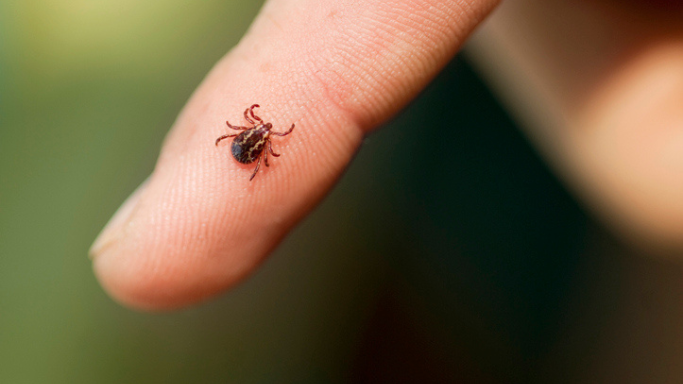
On August 17, Health and Human Services (HHS) Secretary Robert F. Kennedy Jr. appeared alongside actor Dennis Quaid to announce a set of federal actions against Lyme disease, alpha-gal syndrome, and other tick-borne illnesses. The package includes work with the LymeX Innovation Accelerator to bring two improved FDA-cleared Lyme diagnostics to market, plus nearly $50 million a year in NIH funding for Lyme research and roughly $122 million a year for tick-borne disease research more broadly. This action comes none too soon.
The CDC reported this spring that weekly emergency room visits for tick bites were the highest for that time of year since 2017 across nearly every region of the U.S. About 31 million Americans are bitten by a tick each year, and roughly 476,000 are diagnosed and treated for Lyme disease annually. Reported Lyme cases hit 62,551 in 2022, about 1.7 times the annual average from 2017 through 2019, and reporting has stayed elevated since.
Alpha-gal syndrome, the red meat allergy triggered by a lone star tick bite, has been climbing faster than almost anything else in the category. CDC researchers estimate as many as 450,000 Americans may have been affected since 2010. A Virginia Commonwealth University analysis published this year documented a hundredfold increase in positive alpha-gal antibody tests between 2013 and 2024, with women turning up among the diagnosed more often than men. Patients describe hives, stomach illness, and even anaphylaxis hours after a meal, as well as the natural nutritional challenges that result from beef, pork, lamb, and even dairy products no longer being part of one’s diet.
Two forces are driving the spread. The first is a run of shorter, milder winters. Tick populations are knocked back by long stretches of hard freeze, but recent winters have arrived later, broken earlier, and delivered fewer of those deep cold spells. The result is better overwinter survival, a longer questing season, and a steady expansion of the lone star tick north and west into counties that used to not worry about tick-borne disease. The second factor is deer. Adult blacklegged ticks feed and breed on white-tailed deer, whose numbers have grown from a few hundred thousand a century ago to roughly 30 million today, concentrated most heavily in suburbs where hunting is limited or banned.
That points to a tool already in hand: A 13-year Connecticut study tracked a community that reduced deer density through controlled hunting. Tick abundance fell 76%, infection rates in ticks fell by nearly half, and resident-reported Lyme cases dropped 80%. Hunters fund conservation through license fees and excise taxes, and expanding managed hunts near suburban corridors would do more for public health than another awareness campaign.
This also makes one strain of academic argument all the more galling. In July 2025, two scholars published a paper in the journal Bioethics claiming that spreading tick-borne alpha-gal syndrome is “strongly pro tanto morally obligatory” because a population allergic to meat would eat less of it and emit less carbon. Setting aside the framing of the exercise, their premise is that a chronic and sometimes life-threatening illness counts as a public good because it takes a choice away from people who never agreed to give it up. Deliberately inflicting disease on a population to change its diet is biological warfare, and no environmental ledger makes it acceptable.
Progress is possible through innovation and common-sense conservation tools like hunting; “bioethical” biowarfare need not apply. Over the past century, American air and water have gotten cleaner because of better technology, not because families were made too sick to consume.
The same holds for ticks. Better diagnostics, a Lyme vaccine candidate, permethrin-treated clothing, rodent bait boxes, and intentional deer management are all available. Ticks are the problem worth solving, and Making America Healthy Again should be the goal.